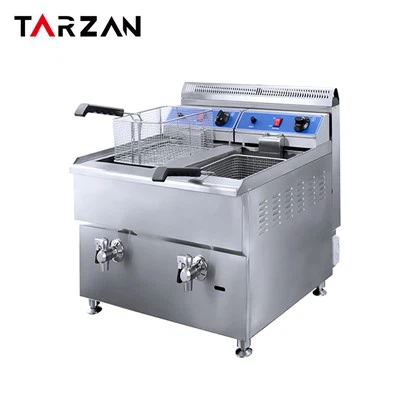
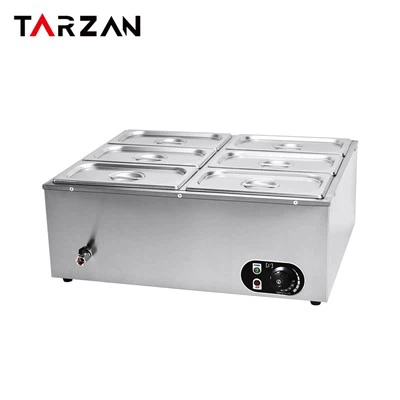
Let me take you on a tour of Tarzan's factory.
If you look only at the finished equipment, you actually won't notice much difference. What is truly fascinating is taking a walk through the factory, starting from the very beginning of the production line, to observe-step by step-how a piece of equipment is actually built. That is when you will likely begin to understand why some equipment stands the test of time, while other units start developing problems after just a short period of use.
The first step is laser cutting
Upon arrival, the steel plates are merely raw materials in their most basic form. They first undergo laser cutting to precisely cut the structural components. While this stage may appear to be nothing more than "cutting the material," a lack of precision here can easily lead to issues such as uneven gaps and misaligned joints during subsequent assembly-problems that, over time, may even result in structural instability.


Next is the bending process
This is a critical step in determining the structural stability of the entire assembly. Even a slight deviation in the bending angle will affect the distribution of forces, potentially leading to deformation or structural fatigue over time.
At this stage, all our equipment operates on a fully blueprint-driven production system. Every bending point is accompanied by a corresponding engineering drawing, and comprehensive processing parameters-including angles, pressure, and springback compensation-are pre-configured. The objective is straightforward: rather than relying on "experiential feel," we ensure absolute consistency across every batch of structural components, thereby eliminating variations between different production runs of the same model. It is during this phase that flat materials are transformed into three-dimensional forms, and the overall structure gradually takes shape.


Next is the stamping machine
This stage involves more than just simple hole-punching; rather, it utilizes various dies to stamp and form the steel plates into critical structural components-specifically, functional parts such as the oil guide channels and mounting brackets found within deep fryers.
Based on the structural requirements of various components, we utilize corresponding specialized molds to directly stamp steel sheets into the desired shapes-some featuring grooves, others incorporating flow-guiding structures, and some designed with reinforcing ribs.
The focus of this approach is not merely on "producing" the components, but rather on ensuring they possess structural integrity and functionality right from the outset-rather than requiring subsequent reinforcement. Take the oil-filtration structure, for instance: if it is not properly formed during the molding stage, it not only hinders the rate of oil drainage but may also lead to deformation or oil accumulation issues when subjected to prolonged, high-temperature frying environments.
Through precision stamping using molds, we can guarantee shape consistency across every batch of components; this, in turn, minimizes the need for adjustments and reduces errors during the subsequent assembly process, thereby enhancing the structural stability of the entire machine.


Next, we proceed to the welding stage
This is essentially the deciding factor in whether a device can "withstand prolonged use." Details such as the uniformity of solder joints, the presence of structural reinforcements, and the absence of cold joints may not be immediately apparent in the short term; however, in environments involving high temperatures and high-frequency operation, they directly impact overall stability.
Welding is followed by sanding
This stage may appear inconspicuous, but in reality, it serves as the critical dividing line for a multitude of experiential details.
Upon completion of welding, the metal surface typically exhibits weld spots, burrs, and minor irregularities. If left unaddressed, these imperfections not only result in a coarse aesthetic but may also give rise to practical issues during actual use-such as trapping grease during cleaning, creating uncomfortable or snag-prone edges, or even posing a risk of scratches during routine operations.
We will meticulously grind down every weld joint and corner-including exposed edges, contact areas, and recessed spots prone to oil accumulation-to ensure the entire surface transitions as smoothly as possible, free from any prominent sharp angles or protrusions.
For equipment that frequently comes into contact with grease-such as deep fryers and griddles-polishing is not merely a matter of aesthetics; it directly impacts cleaning efficiency. The smoother the surface, the less likely grease is to adhere, making subsequent maintenance significantly easier.
Quite often, if this step is executed with a little extra care, the customer's experience during use will be noticeably different-even if they don't explicitly voice it, the difference will become apparent over the course of long-term use.


Finally, the assembly
We manage our parts warehouse, accessories warehouse, and assembly area separately, with each component following a fixed workflow path. The benefit of this approach is a reduction in mismatches and missed installations, resulting in greater overall stability during mass production and making it easier to ensure consistency.
Finally, the shipping warehouse
Once the equipment has been assembled, it is brought here for centralized sorting and packaging.
Different models are stored in designated zones, and both accessories and main units undergo separate verification checks, followed by a final packaging confirmation, to minimize the risk of shipping the wrong model or omitting components.
Prior to shipment, we conduct a comprehensive final verification to confirm that the order and configuration are accurate before arranging dispatch, ensuring that every batch of equipment leaves the factory in a complete and intact state.
So sometimes, rather than just looking at the specifications, it is better to truly look at how a device is actually made.