Introduction
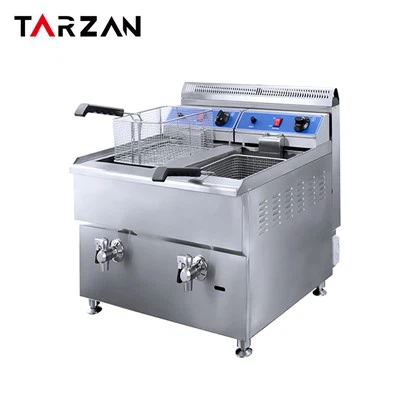
A commercial deep fryer is one of the most important investments for restaurants, fast-food outlets, hotels, food trucks, cafeterias, and catering businesses. Whether you serve French fries, fried chicken, seafood, onion rings, tempura, or other fried foods, the quality and efficiency of your fryer directly affect food consistency, operating costs, and customer satisfaction.
Choosing the wrong fryer can result in higher energy consumption, increased oil costs, inconsistent cooking results, and unnecessary maintenance expenses. On the other hand, selecting the right commercial deep fryer can improve productivity, reduce operating costs, and increase profitability.
This comprehensive buyer's guide explains everything restaurant owners, kitchen managers, distributors, and foodservice operators need to know before purchasing a commercial deep fryer.
Why Choosing the Right Commercial Deep Fryer Matters?
In busy commercial kitchens, speed and consistency are critical. Customers expect perfectly cooked food every time. A high-quality fryer helps maintain precise temperatures, recover heat quickly between batches, and reduce oil degradation.
Benefits of choosing the right fryer include:
| Faster cooking times |
| Better food quality and consistency |
| Reduced oil consumption |
| Lower energy costs |
| Improved kitchen productivity |
| Easier cleaning and maintenance |
| Longer equipment lifespan |
Types of Commercial Deep Fryers
Before comparing specific models, it is important to understand the various types of commercial fryers available.
| Open Pot Fryers (Open pot fryers are among the most common commercial fryers used in restaurants.) |
|
| Advantages: | Best suited for: |
| Easy to clean | Fast-food restaurants |
| Excellent for fries and general-purpose frying | Burger chains |
| High production capacity | Cafeterias |
| Lower maintenance requirements | Casual dining establishments |
| Tube Fryers (Tube fryers contain heating tubes inside the oil tank.) |
|
| Advantages: | Best suited for: |
| Better for breaded foods | Fried chicken restaurants |
| Longer oil life | Seafood restaurants |
| Excellent sediment collection | High-volume operations |
| Flat Bottom Fryers (Flat bottom fryers are designed for delicate foods.) |
|
| Advantages: | Best suited for: |
| Suitable for lightly battered products | Tempura |
| Gentle cooking process | Specialty seafood |
| / | Delicate fried foods |
Gas vs Electric Commercial Fryers
One of the most important purchasing decisions is choosing between gas and electric models.
| Gas Deep Fryers (Gas fryers use natural gas or propane as a heat source.) |
||
| Advantages: | Disadvantages: | Recommended for: |
| Faster temperature recovery | Requires gas installation | High-volume restaurants |
| Lower operating costs in many regions | Ventilation requirements may be more demanding | Fried chicken chains |
| High heat output | Higher installation costs | Quick-service restaurants |
| Ideal for heavy-duty operations | / | / |
| Electric Deep Fryers (Electric fryers use heating elements immersed in oil.) |
||
| Advantages: | Disadvantages: | Recommended for: |
| Precise temperature control | Slower heat recovery | Cafes |
| Easier installation | Higher electricity costs in some markets | Food courts |
| More compact designs | / | Hotels |
| Cleaner operation | / | Small restaurants |
Summary
Selecting the right commercial deep fryer is a critical decision that directly impacts food quality, operational efficiency, and long-term profitability. This guide has outlined the key factors every foodservice operator must evaluate-from fryer construction types (open pot, tube, and flat bottom) to the fundamental choice between gas and electric models.
Open-pot fryers offer ease of cleaning and high versatility, tube fryers excel in breaded-product applications and oil longevity, while flat-bottom units are ideal for delicate, battered items.
Meanwhile, gas fryers deliver rapid heat recovery and lower fuel costs for high-volume kitchens, whereas electric fryers provide precise temperature stability, simpler installation, and cleaner operation for smaller or space-constrained venues. Ultimately, the optimal choice depends on your menu, peak output demands, available utilities, and kitchen layout.
By aligning these technical specifications with your business needs, you can achieve consistent frying results, reduce oil and energy waste, and ensure a reliable, cost-effective operation that satisfies customers and maximizes your return on investment.
That covers the fundamentals. In the upcoming post, we'll dig into the real meat of the buying process – how to accurately size your unit, which features are actually worth paying for, and the most common mistakes to avoid.