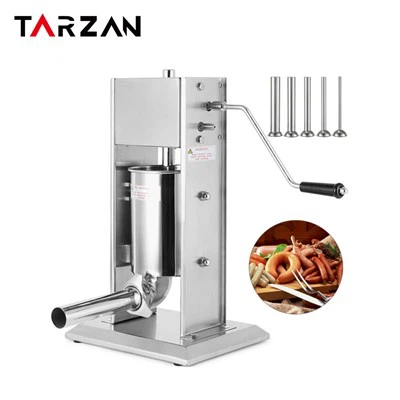
Hey there! As a supplier of sausage fillers, I often get asked, "Do sausage fillers require special maintenance?" Well, let's dive right into it and find out.
First off, let me tell you a bit about the different types of sausage fillers we offer. We've got the Sausage Maker Stuffer, which is great for home - use or small - scale operations. It's easy to handle and can get the job done efficiently. Then, there's the Power Sausage Stuffer. This one packs more punch and is suitable for medium - sized businesses. And for the big boys, our Commercial Electric Sausage Stuffer can handle high - volume production with ease.
Now, back to the question. Do these machines need special maintenance? The short answer is yes, but it's not as complicated as it might seem.
Daily Maintenance
After each use, it's super important to clean your sausage filler thoroughly. Food residue can lead to all sorts of problems like bacteria growth, which is a huge no - no when it comes to food processing. I mean, you don't want your delicious sausages to be contaminated, right?
Start by disassembling the parts that come in contact with the sausage meat. Most of our sausage fillers have parts that are easy to take apart, like funnels, tubes, and pistons. Check the user manual for specific instructions on how to disassemble your model.
Once you've got all the parts out, give them a good soak in warm, soapy water. This helps to loosen up any stubborn bits of meat. Use a soft brush to gently scrub the parts, making sure to get into all the nooks and crannies. Don't use abrasive brushes or cleaners because they can scratch the surfaces of the parts. Scratches can trap more food and make future cleaning a pain.
After scrubbing, rinse the parts under running water to get rid of all the soap. Make sure you dry them completely before reassembling the machine. Water droplets left on the parts can cause rust, especially if your machine has some metal components.
For the machine's exterior, you can use a damp cloth to wipe it down. This gets rid of any spills or splatters that might have occurred during the stuffing process.


Weekly or Bi - weekly Maintenance
In addition to daily cleaning, you should do a more in - depth inspection on a weekly or bi - weekly basis. Check all the moving parts of the sausage filler. Look for any signs of wear and tear, like loose screws or belts that are starting to fray. If you find any loose parts, tighten them up right away. If a belt or other component looks like it's about to give out, it's best to replace it before it causes a breakdown during production.
Lubrication is another key part of the maintenance routine. Some of the moving parts in our sausage fillers need to be lubricated regularly to ensure smooth operation. Again, refer to the user manual for the specific parts that need lubrication and the type of lubricant to use. Over - lubricating can be just as bad as under - lubricating, as it can attract dust and debris.
Seasonal or Annual Maintenance
On a long - term basis, you might want to consider having a professional technician take a look at your sausage filler once a year or so. They can do a comprehensive inspection and make sure that everything is in top - notch condition. They have the expertise and tools to detect any potential problems that you might miss.
A professional can also perform more complex maintenance tasks, like calibrating the machine to ensure accurate filling. This is especially important for commercial operations where consistency is key.
Why Special Maintenance Matters
You might be wondering, "Why all this fuss about maintenance? Can't I just use the machine and clean it a little bit?" Well, here's the deal. Regular and proper maintenance extends the lifespan of your sausage filler. A well - maintained machine will last you years, saving you a ton of money in the long run. You won't have to keep buying new machines every few months because of neglect.
Proper maintenance also ensures the quality of your sausages. A clean and well - running machine will produce consistent sausages with the right amount of filling every time. It reduces the risk of contamination, which is crucial for meeting food safety standards.
And let's not forget about efficiency. A machine that's in good condition operates smoothly, which means faster production times. You can get more sausages out in less time, increasing your productivity and ultimately your profits.
Conclusion
So, to sum it all up, yes, sausage fillers do require special maintenance. But it's not a huge hassle if you stay on top of it. By following the daily, weekly, and long - term maintenance steps, you can keep your sausage filler running like a champ.
If you're in the market for a new sausage filler or need some advice on maintenance for your existing one, don't hesitate to reach out. We're here to help you make the most of your sausage - making business. Whether it's choosing the right model, getting replacement parts, or just answering your questions, we've got you covered.
Let's work together to take your sausage production to the next level. Contact us for more information and let's start this exciting journey!
References
- Manufacturer's user manuals for sausage fillers
- Industry best practices for food processing equipment maintenance